
In heavy machinery processing, the choice of grinding discs directly impacts both productivity and operational safety. Selecting a disc that consistently withstands prolonged heavy load conditions ensures not only optimized output but also reduced downtime risks. This article dissects critical performance indicators for high-wear brazed diamond grinding discs, including substrate strength, brazing interface bonding, diamond layer uniformity, and dynamic balance. We also contrast typical failure modes such as edge chipping, diamond shedding, and abnormal vibrations across different working environments. For frontline engineers and operators, we offer a practical self-inspection checklist to preemptively identify potential risks, empowering your team for stable and efficient continuous operation.
Heavy-duty grinding environments exert extreme mechanical and thermal stresses on grinding discs. Failures often originate from multiple factors:
Let’s explore the primary technical benchmarks essential for grinding discs used in heavy machinery:
Different workpiece materials impose unique challenges on grinding disc performance:
| Material | Typical Failure Mode | Common Causes | Recommended Solution |
|---|---|---|---|
| Stainless Steel | Edge Chipping | Thermal stress, work hardening effect | Use high-strength substrate and improved brazing alloy for heat dissipation |
| Carbide & Hard Alloy | Diamond Shedding | Insufficient bond strength & uneven diamond coverage | Optimize brazing joint and enforce uniform diamond plating |
| Gray Cast Iron | Abnormal Vibration | Dynamic imbalance & uneven wear | Dynamic balancing and frequent inspection for wear uniformity |
Empower your operators with a straightforward on-site inspection routine—conduct this before each shift to avoid unexpected failures:
Pro Tip: Save this checklist for regular reference to keep your production running smoothly—make every grinding session safer and more efficient.
“Since switching to UHD’s customized brazed diamond discs tailored to our plant’s specific load and speed conditions, we reduced downtime by 30% and enhanced edge finish consistency drastically.” – Senior Engineer, Automotive Parts Manufacturer
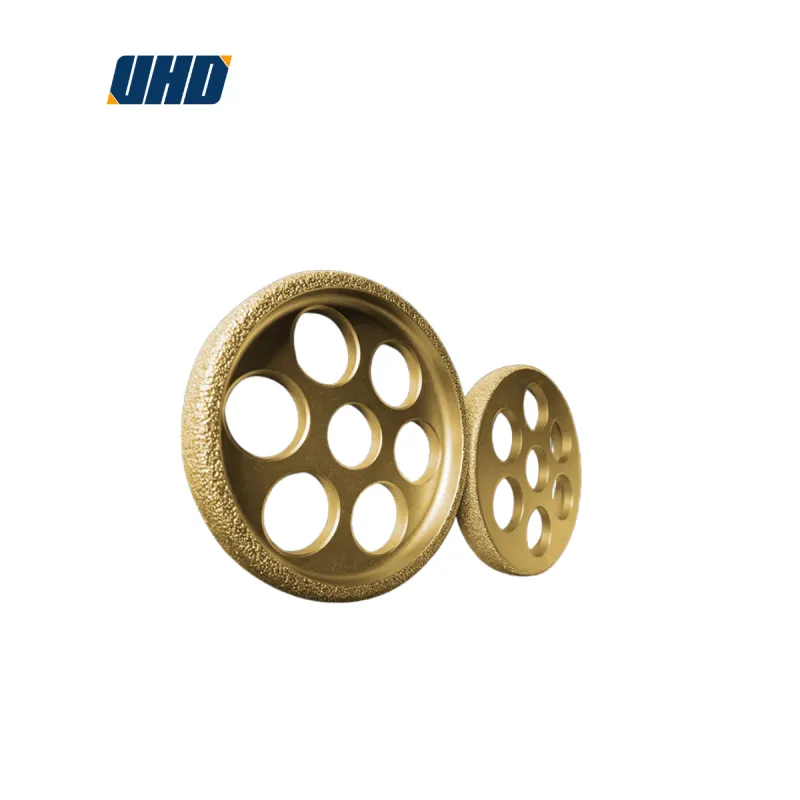
UHD’s high-durability brazed diamond grinding discs are engineered to match your equipment’s operational parameters perfectly. Combining superior substrate materials, advanced metallurgical bonding, and precision dynamic balancing, UHD floors the competition with unmatched wear resistance and efficiency. Whether processing stainless steel, hard alloys, or cast iron, UHD’s solutions let you focus on production without worry.

.png?x-oss-process=image/resize,h_800,m_lfit/format,webp)
 brazed diamond grinding wheel
industrial diamond tools
diamond grinding technology
superabrasive cutting tools
grinding wheel durability
brazed diamond grinding wheels
high-strength grinding
customized grinding wheels
production efficiency improvement
diamond abrasive tools
Automation diamond saw blades
Vacuum brazing technology
Metal cutting tools
Production efficiency improvement
Cutting equipment durability
brazed diamond grinding wheel
125mm grinding wheel
heavy-duty machining
high-intensity grinding
diamond abrasive tools
brazed diamond grinding wheel
gray cast iron grinding
stainless steel machining tools
high-performance grinding solutions
industrial diamond abrasives
brazed diamond grinding wheel
industrial diamond tools
diamond grinding technology
superabrasive cutting tools
grinding wheel durability
brazed diamond grinding wheels
high-strength grinding
customized grinding wheels
production efficiency improvement
diamond abrasive tools
Automation diamond saw blades
Vacuum brazing technology
Metal cutting tools
Production efficiency improvement
Cutting equipment durability
brazed diamond grinding wheel
125mm grinding wheel
heavy-duty machining
high-intensity grinding
diamond abrasive tools
brazed diamond grinding wheel
gray cast iron grinding
stainless steel machining tools
high-performance grinding solutions
industrial diamond abrasives



.png?x-oss-process=image/resize,h_100,m_lfit/format,webp)
.png?x-oss-process=image/resize,h_100,m_lfit/format,webp)
.png?x-oss-process=image/resize,h_100,m_lfit/format,webp)
.png?x-oss-process=image/resize,h_800,m_lfit/format,webp)
.png?x-oss-process=image/resize,m_fill,h_800,w_800/format,webp)