
In industrial environments where heavy-duty continuous grinding is the norm, the compatibility of grinding discs critically influences production efficiency and equipment longevity. The substrate material strength serves as the primary benchmark to determine whether a grinding disc can withstand intense operational loads without premature failure.
The substrate forms the structural backbone of a grinding disc. Its mechanical properties—namely yield strength, tensile strength, and impact resistance—directly affect the disc’s ability to endure high-impact loads, rotational stresses, and thermal fluctuations. A substrate with inadequate strength results in defects like chipping, delamination, and catastrophic failure during operation, leading to unexpected downtime and costly repairs.
Four critical elements determine the substrate’s capability to meet heavy-load requirements:
Different industrial sectors present unique challenges, making substrate assessment indispensable. For example:
Typical failure indicators in these scenarios include blade-edge chipping, abrasive grain delamination, and interface debonding, primarily arising from insufficient substrate strength or poor bonding during brazing.
To empower operators and maintenance teams, a straightforward substrate strength evaluation workflow can mitigate risk effectively:
This hands-on approach enables early identification of substrate vulnerabilities before escalating into operational failures.
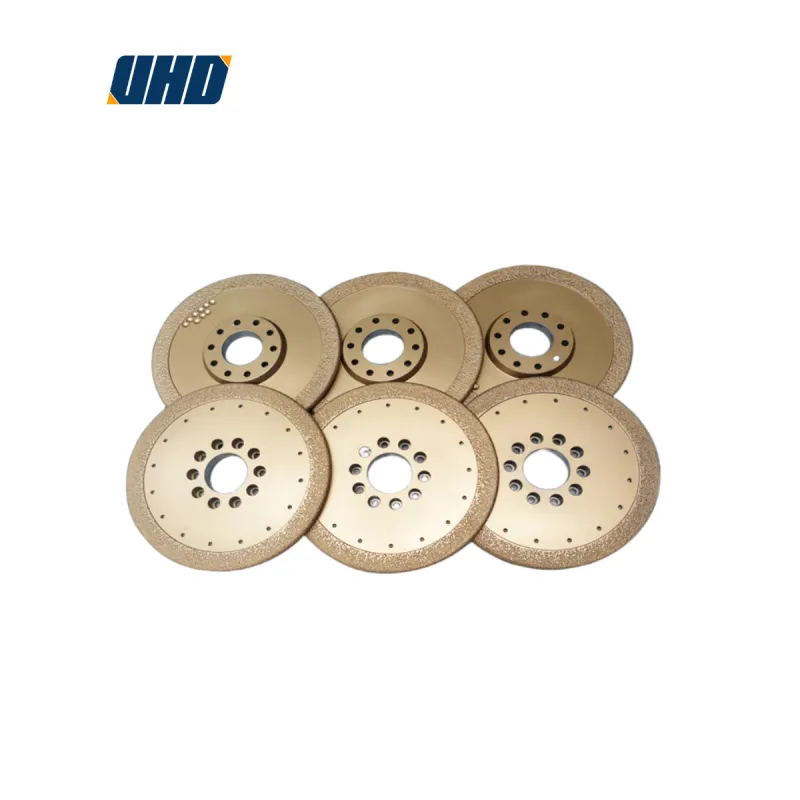
UHD high-wear resistant brazed diamond grinding discs have been widely adopted across worldwide heavy-load machining scenarios, thanks to their superior substrate strength and robust brazing interface integrity.
Industry feedback confirms UHD discs significantly reduce unexpected breakdown rates by up to 35%, enhancing continuous production uptime and safeguarding equipment investments.
The following conceptual model illustrates the relationship between substrate tensile strength and key operational variables:
| Operational Variable | Effect on Substrate Stress | Recommended Minimum Strength (MPa) |
|---|---|---|
| Load (N) | Directly proportional; increased load elevates stress. | 850+ |
| Rotational Speed (RPM) | Higher speeds cause centrifugal stress and heating. | 900+ |
| Operating Temperature (℃) | Thermal expansion affects microstructure stability. | 800+ |
Continuous monitoring and maintenance aligned with these parameters prevent substrate degradation and extend grinding disc service life.

.png?x-oss-process=image/resize,h_800,m_lfit/format,webp)
 contour grinding
diamond grinding wheel selection
industrial grinding optimization
large diameter grinding wheel
custom grinding solutions
grinding wheel installation
grinding wheel balancing
grinding safety procedures
diamond grinding wheels
coolant management in grinding
Brazed diamond grinding wheels
High - intensity grinding
Grinding wheel customization
Wear - resistant grinding wheels
UHD grinding wheel technology
Gray cast iron grinding
Brazed diamond grinding disc
Scrap rate reduction
Anti - impact grinding disc design
Grinding parameter optimization
Brazed diamond grinding disc
Heavy - load grinding efficiency
Wear - resistant diamond tools
Stainless steel high - efficiency grinding solution
Industrial - grade grinding disc lifespan improvement
contour grinding
diamond grinding wheel selection
industrial grinding optimization
large diameter grinding wheel
custom grinding solutions
grinding wheel installation
grinding wheel balancing
grinding safety procedures
diamond grinding wheels
coolant management in grinding
Brazed diamond grinding wheels
High - intensity grinding
Grinding wheel customization
Wear - resistant grinding wheels
UHD grinding wheel technology
Gray cast iron grinding
Brazed diamond grinding disc
Scrap rate reduction
Anti - impact grinding disc design
Grinding parameter optimization
Brazed diamond grinding disc
Heavy - load grinding efficiency
Wear - resistant diamond tools
Stainless steel high - efficiency grinding solution
Industrial - grade grinding disc lifespan improvement



.png?x-oss-process=image/resize,h_100,m_lfit/format,webp)
.png?x-oss-process=image/resize,h_100,m_lfit/format,webp)
.png?x-oss-process=image/resize,h_100,m_lfit/format,webp)
.png?x-oss-process=image/resize,h_800,m_lfit/format,webp)
.png?x-oss-process=image/resize,m_fill,h_800,w_800/format,webp)